
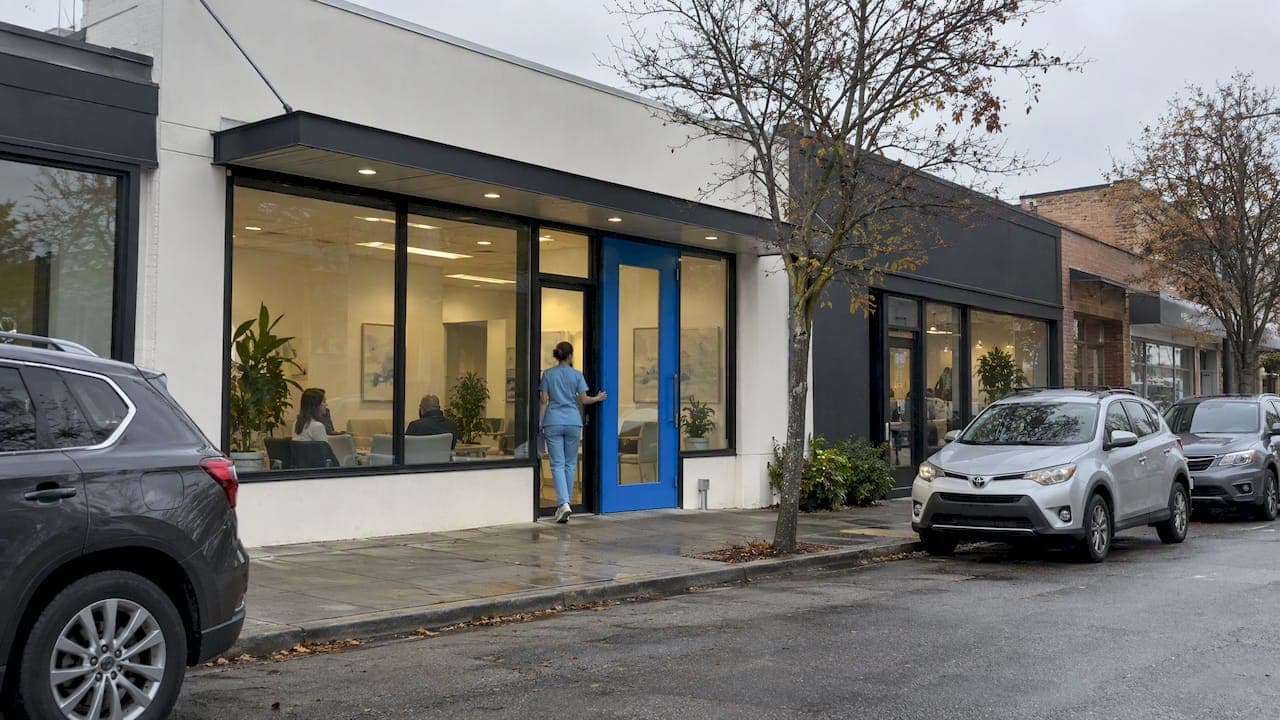
Geofencing for clinics means drawing a virtual boundary around a place and showing ads to phones that enter it. For a medical practice, the safe version is a fence around a neighborhood, a community event or your own parking lot. The risky version is a fence around other clinics or around patients' health visits, and in 2026 that is where regulators are looking. Below is how it works, what the research says, where the legal lines sit, and what we would put your budget into instead.
TL;DR
- Geofencing uses GPS, Wi-Fi or cellular signals to trigger ads when a device enters a set area. The tech is simple. The compliance is not.
- The FTC has finalized orders against data brokers that sold lists of people who visited health-related locations. Fencing other clinics to catch their patients is the practice to avoid.
- Evidence for clinic geofencing is thin: one small rural dental study showed a lift, and a research recruitment test found it far costlier than Facebook ads.
- Search intent, local SEO and retention automation reach local patients without tracking anyone's physical visits to a health facility.
Table of Contents
- What geofencing actually does
- What the research says about results
- The legal line: sensitive locations
- Where HIPAA comes in
- The platforms are moving away from precision
- What the FTC wants from location data users
- Our view: geofencing is the wrong first move
- What to do instead
- How to vet a geofencing proposal
- Working with KLYR Media
- FAQ
- Sources
What geofencing actually does
A geofence is a boundary on a map. When a phone with location services on crosses it, software can trigger something: a mobile ad, a push notification, a log entry. The signal can come from GPS, RFID, Wi-Fi or cellular data.
In marketing, the flow is usually this:
- You or a vendor draw a radius around a location.
- Ad networks or data providers identify devices that were inside it.
- Those devices get your ads in apps and on websites for days or weeks afterward.
That third step is the part that matters. The ad does not just fire while someone stands in the zone. It follows the device afterward. Which means someone is storing a record that a specific device was at a specific place. For a clinic, that record is the problem.
What the research says about results
We like data. Here is what we found, and it is not a ringing endorsement.
The case for it. A 2020 study in rural North Carolina used geofenced messages to raise awareness of a dental clinic. Awareness rose significantly, and the share of respondents reporting a dental visit by themselves or family went from 6.5% to 15.0%. Worth noting: it was 200 respondents total (100 before, 100 after), over three months in 2017, in one rural area. Promising, not proof that it works for your suburban primary care practice.
The case against it. A 2021 rheumatology recruitment study compared web-based geofencing with Facebook ads. Facebook cost $60 per self-identified subject. Geofencing cost $1,600. Facebook ads drew 3,649 clicks, about 0.93% of displays, against 428 clicks, about 0.10%, for geofencing. That was research recruitment, not patient acquisition, so do not copy the numbers into your budget. But a gap that size says: test before you scale.
| Question | Dental clinic study (2020) | Rheumatology recruitment (2021) |
|---|---|---|
| Goal | Local awareness and visits | Finding research subjects |
| Sample | 200 respondents | About 413,000 geofenced ad displays |
| Result | Awareness and visit rates rose | Facebook ads cost far less per subject |
| Takeaway | Local reach can help small clinics | Geofencing is not automatically the cheapest channel |
The legal line: sensitive locations
This is the section to read twice.
The FTC has been clear about location data tied to health facilities. In its January 2025 order, the agency prohibited Gravy Analytics and Venntel from selling sensitive location data, including data about visits to health-related locations. The original complaint alleged the company used geofencing to identify and sell lists of people who visited healthcare facilities and places of worship. A 2024 order against X-Mode Social and Outlogic went the same direction.
Those cases targeted data brokers, not clinics. But look at who supplies the audiences for many geofencing campaigns. It is the same kind of broker. If your vendor's audience list came from people seen at medical facilities, you are standing downstream of exactly the practice regulators are shutting down.
So here is our rule of thumb:
- Don't fence competing clinics, urgent care centers, mental health offices or reproductive health providers to catch their visitors.
- Don't build retargeting lists of people seen at your own front door and then pair them with anything that identifies a patient.
- Do ask any vendor, in writing, where the location data comes from and whether it includes visits to health facilities.
This is not legal advice. Have a healthcare attorney review any location-based campaign before it launches.
Where HIPAA comes in
HIPAA covers more than most marketers think. HHS guidance on online tracking technologies explains that tracking tools on a regulated entity's websites and apps can involve protected health information when they collect identifiers tied to health care. A phone that visited your clinic, linked to a patient record or a device ID, is the kind of thing that can cross that line.
Some practical consequences:
- If your patient app or portal collects location, treat it as high risk. Don't track location inside any app that handles patient health information unless you have a documented business associate agreement and strong encryption or de-identification.
- Marketing uses of PHI generally need patient authorization. The HHS page on the HIPAA Privacy Rule and the FTC Act is a good starting point for understanding where HIPAA ends and FTC authority begins. A lot of consumer health data sits outside HIPAA and inside the FTC's reach.
- Also note HIPAA often doesn't protect data on a patient's own phone. HHS says the rules apply when PHI is created, received, maintained or transmitted by a covered entity or business associate. That is a reason to be careful, not a loophole.
If your practice has a HIPAA-compliant website, you already know the pattern: every tool that touches a visitor needs a compliance check. Geofencing is no different. For the web side, see our HIPAA-compliant web design service.
The platforms are moving away from precision
Even without regulators, the ad tech is shifting. Google's real-time bidding documentation says it provides device geolocation using only IP geolocation, never GPS, and shares only coarse location that many users have in common. In practice, the high-precision "fence around a single building" pitch is harder to deliver on Google's side than it used to be. If a vendor promises building-level accuracy through those channels, ask them exactly how.

Google Ads also has its own healthcare rules. Our Google Ads healthcare policy checklist walks through them.
What the FTC wants from location data users
The FTC's best practices for mobile health app developers are aimed at app makers, but the logic helps any clinic thinking about location:
- Minimize data. If you don't need precise location, don't collect it. If you must, aggregate it so it can't be tied back to a person.
- Get express consent. Not buried in a privacy policy. A clear, just-in-time prompt.
- Let people control it. A simple settings dashboard builds trust.
Read those three lines against any geofencing proposal you receive. If the plan fails them, pass.
Our view: geofencing is the wrong first move
We work only with healthcare providers, so we see the same pattern in independent practices. Someone pitches a shiny tactic. The owner is busy, the phones are ringing less than they should, and "we'll show ads to people near our competitor" sounds like a shortcut. It isn't.
Here is where we land:
- Patients choose clinics mostly by searching. A person with a sore tooth or a child with an ear infection types a query. That is intent you can capture without following anyone's phone.
- The patients you already have are the cheapest growth. Missed recalls, unanswered calls and no follow-up are revenue that never walked in, or walked out and didn't return.
- Compliance has to come first, not as a patch. A tactic that needs a legal footnote on day one deserves a hard look.
If you want a fence, make it a harmless one: a neighborhood-level zone for a health fair, a school-year push for sports physicals, or a seasonal flu shot reminder, with no list of "people who visited a clinic" and a vendor who can document data sources. Treat it as a small test with a stop date, not a pillar.
— Opinly
What to do instead
These are the channels we would fund before any geofence.
1. Local search and Google Business Profile
People who search "urgent care near me" are already looking. Accurate listings, reviews, service pages for each location and fast mobile pages win them. Our guide on promoting your clinic location covers the basics, and our healthcare SEO service is built around it.
2. Search ads with compliant targeting
Google Ads lets you target by city, ZIP code or radius using the coarse location it supports, plus keywords that show intent. You pay when someone searches for what you do. See how to optimize Google Ads for healthcare and some real clinic campaign examples. For broader audience thinking, our piece on targeted healthcare advertising is a good companion.
3. Call tracking done carefully
You need to know which ads make the phone ring. You also need to know what the recordings and logs capture. Start with what clinics need to know about call tracking.
4. Retention automation
Recall reminders, appointment confirmations and follow-ups by text or email reach patients who already know you, with their consent and inside a system built for it. That is where many independent practices leak the most.
How to vet a geofencing proposal
If you still want to test one, put these questions to the vendor before signing anything:
- Where does your location data come from? Name the sources.
- Do any audiences include people seen at medical or other sensitive locations?
- Will you fence competitors' facilities? (If yes, stop here.)
- What is stored about devices that entered the zone, and for how long?
- Will any list be matched to our patient records, email or phone data?
- Who is responsible if a regulator asks questions?
- How will you measure actual appointments, not just impressions?
A good vendor answers in writing and without drama. A vague one tells you what you need to know.
Working with KLYR Media
We build marketing for independent pharmacies, clinics and practices, with compliance built in from the start. That means healthcare PPC built on intent, local SEO that gets you found, and retention automation that brings patients back. If you are weighing a location-based campaign and want a second opinion, talk to our team.
FAQ
Is geofencing legal for clinics?
Geofencing itself is a technology, not a violation. The risk is in how location data is sourced and used. The FTC has acted against data brokers that sold information about visits to health-related locations, so avoid anything that identifies people by their visits to medical facilities. Run any campaign past a healthcare attorney.
Does geofencing violate HIPAA?
Not automatically. HIPAA applies when a covered entity or business associate handles protected health information. Location data linked to a patient record, app account or device ID can become PHI, as HHS tracking guidance explains for regulated entities' websites and apps. Keep location out of any tool that handles patient data unless a business associate agreement and safeguards are in place.
What is the difference between geolocation and geofencing?
Geolocation is figuring out where a device is. Geofencing is setting a boundary and triggering an action when a device enters or leaves it. Geolocation is the input, geofencing is the rule built on top of it.
Does geofencing work for small practices?
The evidence is mixed. A small rural dental study found higher awareness and visit rates, while a research recruitment test found geofencing far costlier per result than Facebook ads. Test small, track booked appointments and compare against search and local SEO.
Sources
- FTC: order prohibiting Gravy Analytics and Venntel from selling sensitive location data (Jan 2025)
- FTC: complaint against Gravy Analytics and Venntel (Dec 2024)
- FTC: order against X-Mode Social and Outlogic (Jan 2024)
- FTC: Mobile health app developers best practices
- HHS: Use of online tracking technologies by HIPAA covered entities
- HHS: HIPAA and personal cell phones or tablets
- HHS: Collecting, using or sharing consumer health information
- Journal of Rural Health: geofencing for a dental clinic in rural North Carolina
- ACR abstract: social media recruitment in rheumatology research
- Google for Developers: geographical targeting in real-time bidding